Summary:
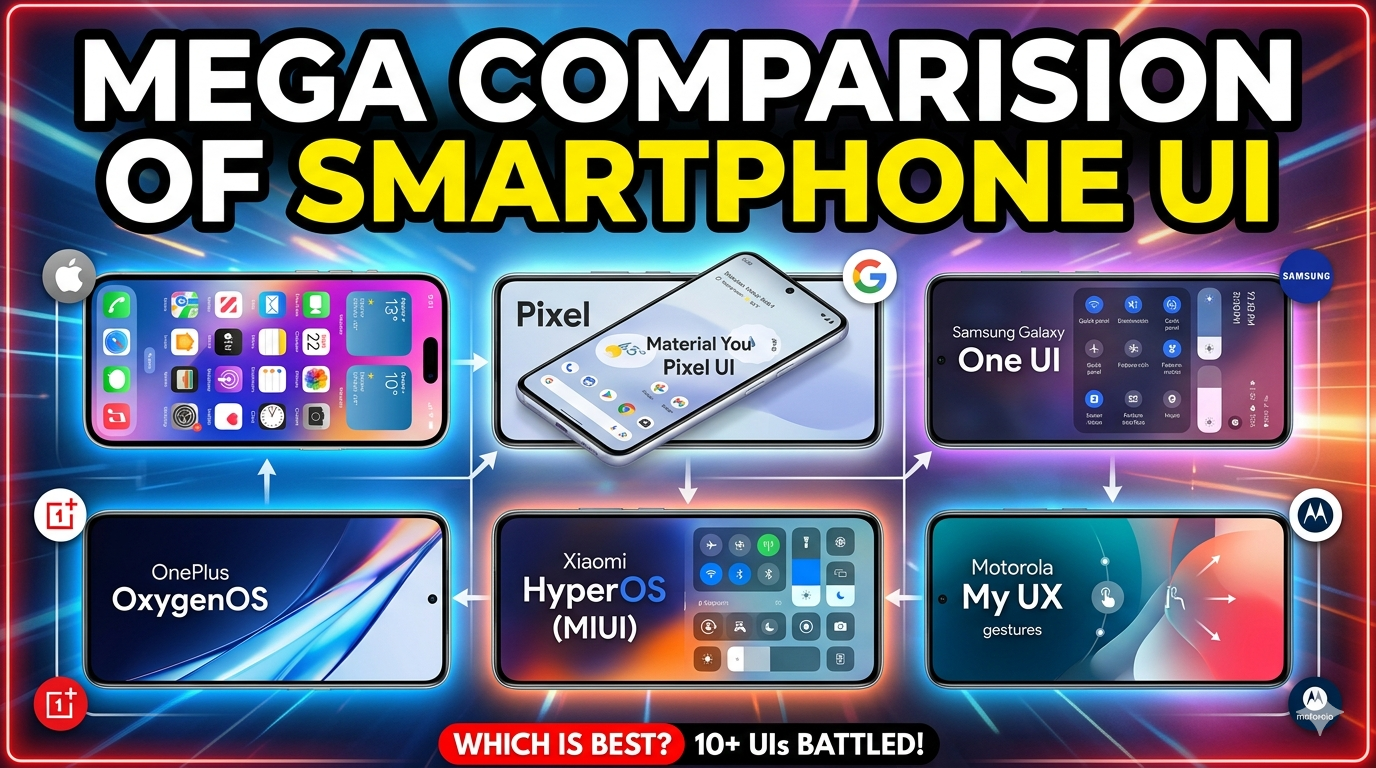
The 2026 Android skin war — One UI 8, OriginOS 6, OxygenOS 16, and HyperOS 3 — highlights how each brand is racing to combine AI, performance, and design in unique ways. Samsung’s One UI 8 refines Galaxy AI with strong multitasking, Knox security, and 7-year updates, but feels bloat-heavy. Vivo’s OriginOS 6 delivers top-tier performance and deep AI features with massive customization, though it’s cluttered and battery-draining. OnePlus’s OxygenOS 16 blends speed, AI integration, and cross-device sync, offering polish but losing its minimalist charm with bloat and slower rollouts. Xiaomi’s HyperOS 3 pushes AI-powered creativity, faster operations, and tight ecosystem linking, yet suffers from iOS-like inconsistencies and delayed updates. Overall, One UI 8 leads in longevity and stability, OriginOS 6 excels in AI and design, OxygenOS 16 balances performance and connectivity, and HyperOS 3 impresses with speed and visuals — proving Android’s evolution is now driven by AI innovation and ecosystem power rather than raw performance.
In 2026, Pixel UI, One UI and HyperOS stand out as the best Android experiences, each catering to a different type of user. Pixel UI offers the cleanest and smoothest experience with fast updates, no bloatware, and useful AI features like Call Screen and Magic Editor, making it ideal for people who value simplicity and reliability.
One UI is the most feature-packed option, offering excellent multitasking, deep customization, and strong ecosystem support with features like DeX, though it can feel heavy on lower-end phones. HyperOS focuses on offering the maximum number of features and strong device connectivity, especially within the Xiaomi ecosystem, but it can feel complex and occasionally cluttered.
Overall, Pixel UI is best for a clean and smooth experience, One UI suits power users who want control and flexibility, and HyperOS is ideal for users who want a feature-rich system and don’t mind a learning curve.
Table of Contents
Android 16: Material You vs. “Liquid Glass” trend
But the surprising thing is that when you got to see the UI of Android 16
So instead of taking more inspiration from Material 3 Expressive They took more inspiration from Apple’s iPhone’s Liquid Glass And in every other UI, you are getting to see Liquid Glass.
Let’s do a comparison in this video of some of these Android skins, UIs
What can be seen in it, what are their pros, what are their cons.
OriginOS 6: Design, performance, AI features, rollout timing
Which had a lot of name because before this, Vivo and iQOO phones used to have Funtouch OS
But in Origin OS 6, the design was refined a little
Performance was improved here, frame rate was improved, transitions were improved
And overall, you got to see faster smooth Animation.
Apart from this, you also get to see a lot of AI features.
In which you get Gemini, Circle to Search 2.0, and AI Retouch, Smart Call Assistant, things like this
And the UI is also very dynamic And here, just like Apple’s iPhone has a dynamic island, something like that And yes, you also get to see a little inspiration like Liquid Glass And yes, in connectivity, you get to see Easy Share And the battery life has been improved a little.
So these are a few things
Now if you see, Origin OS 6 is in the first phone will come out of the box with it, iQOO 15
Then in Vivo’s X300 series
And yes, Vivo and iQOO have done a good job. Which has developed a good and subtle UI here. Which looks pretty good and a lot of people are appreciating it.
Just one thing to see
Do they bring bloatware in their budget phones or not?
Because in the flagship, they have finished the bloatware a little But if there is bloatware with Origin OS in the budget, Then maybe people won’t like this thing so much.
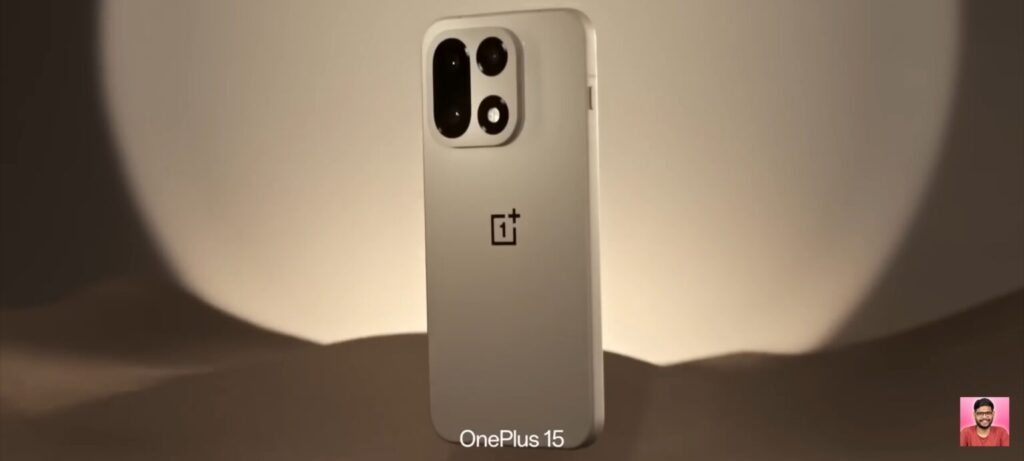
OxygenOS 16: Design shift, animations, OPlus/OP Connect, AI suite.
OxygenOS 16: Design shift, animations, OPlus/OP Connect, AI suite
OxygenOS used to be like Stock Android at one time
But in OxygenOS 16, the visual revolve has been increased so much, That OxygenOS 16 has become
It looks exactly identical
Even their features are very much the same,
As we are talking about performance, you will get to see faster app launches,
In multitasking, you will get to see fluid animation
The Gaussian blur that you see in the liquid glass of the iPhone, Some similar things have also been integrated in it.
Even a very good feature that has been added to your OPPO, Realme and OnePlus That is O Plus Connect type. In which you can share files and information from one device to another But in this, you get to see the connectivity in Apple’s iPhone devices.
Which becomes very interesting here.
If we talk about it, there is a customizable icon here.
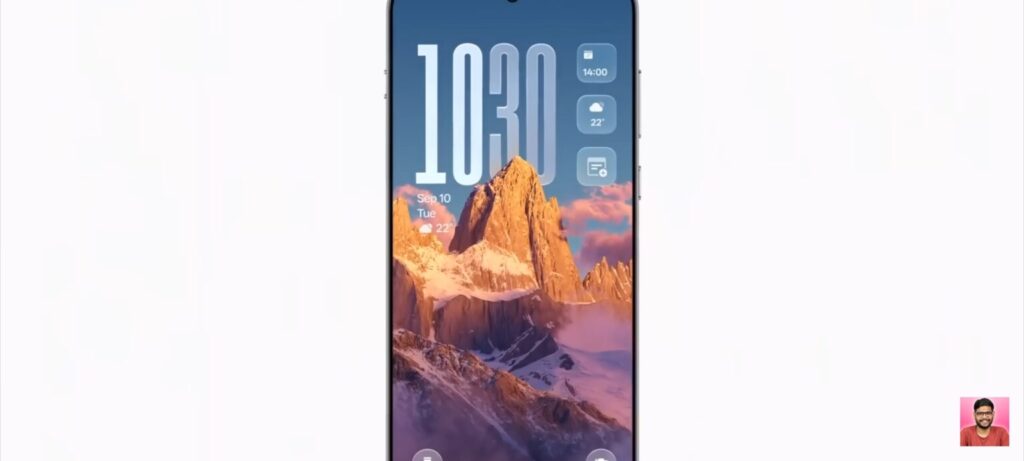
And you get to see a new quick setting And it has also been worked on in App Permission and Data Privacy.
And yes, a lot of work has been done in Artificial Intelligence In which the OnePlus AI has been integrated.
You can use the AI that comes in the OnePlus phone.
You get to see the mind space where you can personalize and summarize things.
And you will get to see all these features like voice recognition, image tools and Gemini AI.
But in the future, OnePlus devices will come with gradual updates.
And it takes a little time in Nord devices.
OnePlus’s UI is quite good.
But yes, it is worth seeing that the AI features
Which are the old phones of OnePlus.
ColorOS 16: Parity with OxygenOS, features, rollout, bloatware concern
it is similar to OxygenOS 16 And ColorOS 16 has exactly the same features Like the OnePlus Connect app.
You can share it with your iPhone.
Here you get to see Gemini’s AI tools.
Here you get to see Liquid Glass.
Along with this, you get to see faster app launches.
You can multitask well And yes, here you get cross-device connectivity through the OnePlus app
And yes, AI-powered 4-Point Video Editing, Magic Eraser, Unblur.
There are some features like this And yes, you get to see better power management The thing is that the rollout will start in most phones in 2026. Oppo will introduce it with its Find X9 series.
And if we talk about it, yes, you can see a little bloatware in Oppo.
Especially the mid-range and budget phones.
So that can be a negative side of it Else, it will be like OxygenOS 16 to a large extent And the same story is on Realme UI 7.
Which is exactly identical to ColorOS 16.
The same Liquid Glass, AI features have also been kept common. And AI has Live Photo collage
A lot of things that were in ColorOS.
Realme UI 7: Parity with others, features, update cadence
Even Liquid Glass, Design, Dynamic Themes, Stackable Widgets.
All these things and Improved Permissions.
The basic thing is that a few things have been changed, But OxygenOS 16, Realme UI 7 and ColorOS 16 are very identical.
Realme UI 7 will first come in GT 8 Pro which will be launched this year.
But the thing with Realme is that there are a lot of phones, In which you will be able to see the update by the end of next year And yes, the important thing is that Realme does not provide a long update in most of its phones So this is one thing on which the old users of Realme.
They may not have seen the update of Realme UI 7.
Realme may have brought it in Selected Phones.
But yes, this is one thing.
But I saw one thing consistently
All the Chinese skins are copying Liquid Glass a lot.
HyperOS 3: iOS-like design, AI, global rollout lag, bugs, bloatware
All the Chinese skins are copying Liquid Glass a lot And the skin that has copied the most. That is Xiaomi’s HyperOS.
So much inspiration in Xiaomi HyperOS 3 Icons, Liquid Glass have been taken so much,
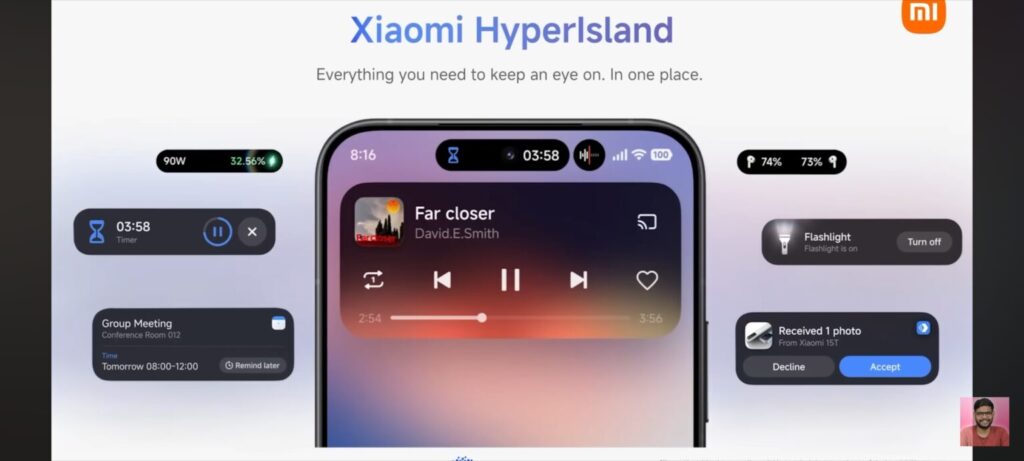
Even then, I would not be surprised about it.

Along with this, you get to see a lot of new things in HyperOS 3.
Here you get to see Quick App Launches You get to see Improved Gaming Performance.
You get to see AI Features.
In real time, you can see in the camera Queries, AI Writing Feature.
There is more than 100 animations.
Even here you get to see the connectivity with Apple’s iPhone.
And there is security and privacy, But the thing is that the problem in HyperOS 3 is that
It has just come in the Chinese version.
There is some time for the Global versions to come in HyperOS.
It will come next year
Other companies are announcing their Global versions quickly.
They are releasing their products quickly, But Xiaomi and Poco are a little behind in HyperOS 3.
One more interesting thing here is that
In HyperOS 3, people keep bugs less
Keep a clean UI.
So that would be a better thing.
Let’s see how much it comes in Global But with its bloatwares.
HyperOS got a little negative criticism
Along with this, there are bugs In HyperOS, people reported things like battery drain.
So let’s see how those things are solved in HyperOS
And how HyperOS 3 solves it.
But there is one thing to see with this.
How many phones do you get to see HyperOS?
And how many old phones do you get to see the HyperOS update here.
So those are some things that are important to wait for officially In the coming time, we will be able to see some more things here.
One UI 8: Tweaks, Galaxy AI, DeX/multitasking, Knox, 7-year updates
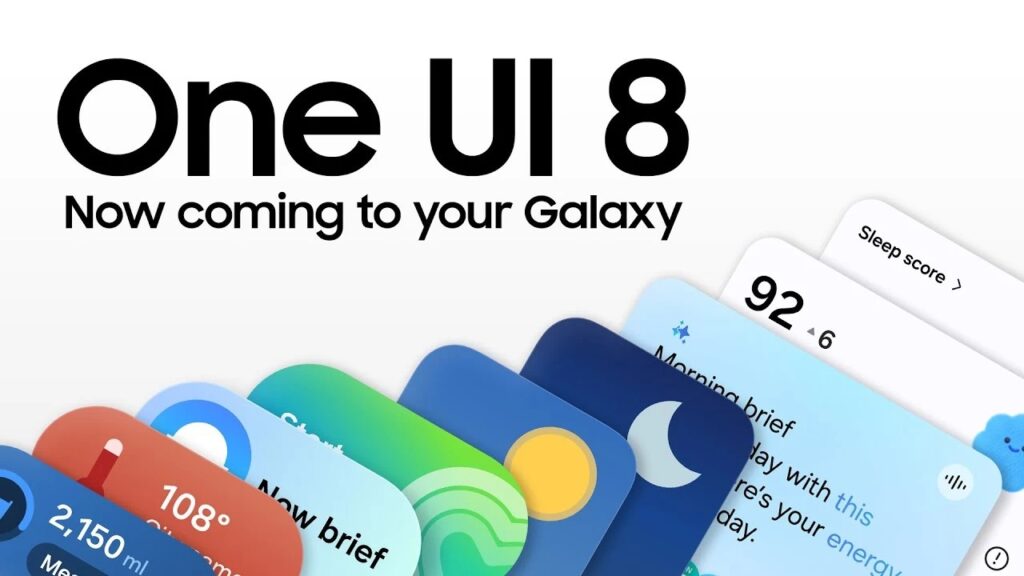
Improvements have been made in quick settings
And some dynamic things have been made better
And the UI looks a lot like the previous version.
But there are some minor changes to be seen
However, this is not the only thing,
When Samsung Galaxy S26 comes here So here you will also get to see One UI 8.5
So it is worth seeing how it performs in it Along with this, if you talk here, So here you get to see a lot of AI and productivity tools.
You get to see Galaxy AI, In which you can work live You even get to see translation in different languages. You also get to see the audio eraser of AI.
You get to see multitasking You get to see improvements with DeX.
In apps, you get to see sticky notes in PDF
Some changes have been made in Samsung’s browser.
Some changes have been made in camera controls,
Battery, animations have been changed.
Improved battery life has been kept Knox security has been enhanced, And the update has been promised for a long time.
But Samsung has not done any major visual change of the design Like your Chinese OEMs did
Or they have not developed a lot of liquid glass.
All these things are exactly the same as you were seeing here before.
But the thing to see is, The AI features that Samsung is relying more on today.
How much differentiating factor they create in Samsung phones in the future This will be one thing.
Motorola My UX: Stock feel, slow updates, new bloat
But you know what the problem is
There are no consistent updates here First thing.
Second thing, Bugs are introduced.
Third thing, In one era, Motorola used to say that
We will keep bloatware free in our phones.
In today’s time, there is an update in Motorola’s old phone.
So a new bloatware side is coming up,
Glance is coming here.
So that’s one thing that Motorola needs to fix here
And the slowest promise of update is made by Motorola here.
Yes So Motorola needs to fix some things here
Updates can be fast here.
New version updates can be removed.
Can clean the UI.
Can work on bugs.
And the software updates that are very limited
Can work here.
Nothing OS 4.0: Dot-matrix style, new AI, bloat/ad issues on budget lines
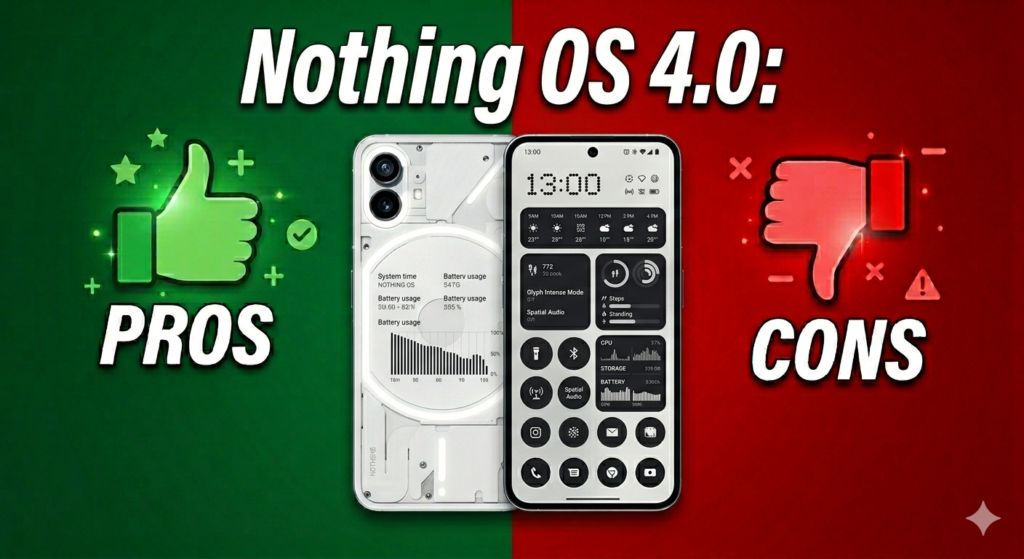

Look, in Nothing OS 4.0
Your dot matrix design is that,
They have added some AI features.
And along with that, they changed the quick setting
And integrated a little bit of Material 3 Expressive.
In the beta of Nothing OS 4.
They have done some good things here
But here the thing is
But in Nothing OS 4.0
In today’s time, bloatware is being introduced
Like Nothing recently added Glimpse.
Which is a party of Glance?
You can see some ads on the lock screen
And the integration of bloatware and ads
Nothing can also backfire a little here Because the thing is Nothing OS 4.0 was very clean at one time People recommended its phone.
Because people used to get a clean experience here
Even the budget phones of CMF.
There was a good experience there too
But now Nothing OS 4.0 is deviating from its direction And here the bloatware that is being added in your phone.
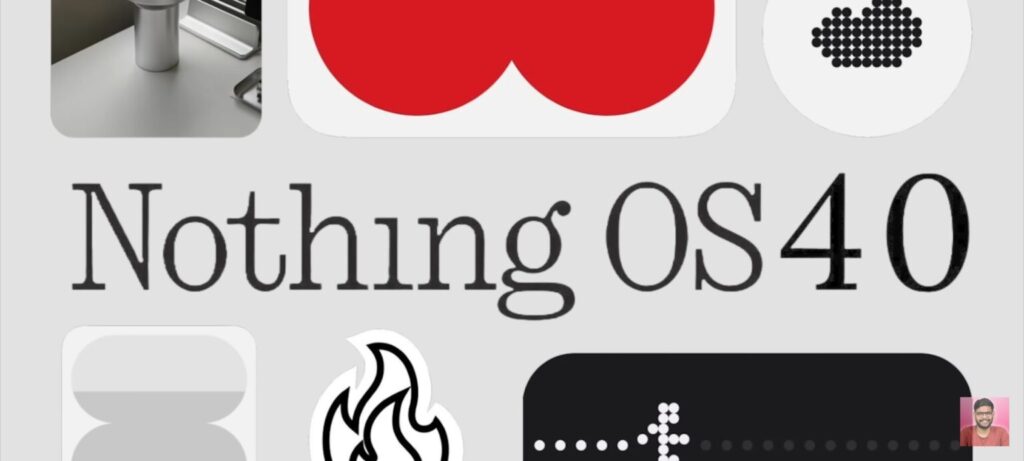
Nothing OS 4.0 will get its criticism here
Even if you give Material 3 Expressive
And some good features.
But here the biggest feature.
That you will give a clean UI
Moving back from there is the biggest problem
So yes, this is one thing where Nothing should work a little bit And they can improve themselves there
But still Nothing has promised a clean experience
In its flagship phone.
But the budget phones like
A series phones or CMF.
There you can accept bloatware in today’s time
And you will definitely see those things there.
Infinix Tecno Itel OS
If we talk about it, But I don’t like it there, they put a lot of bloatware there and they improved the experience a bit this year, but still more or less comes in the tier 3 category.
LAVA UI

You can also keep Lava’s UI here, but they need to work on Lava’s UI and if they develop a customizable UI here, it will be a better thing.
One good thing about Lava is that they don’t put bloatware in their phone, they don’t put a glance, so I like that thing a lot.
But the rest of the people are forgetting their promises and going to bloatware, so that’s one thing.
But Lava people can do a better job of fixing their UI here.
Pixel UI: Material 3, on-device/server AI, fast updates, minimal changes
In Pixel UI, you obviously have Material 3 Expressive.
You won’t find any liquid glass here.
And yes, in Pixel, a lot of focus is put on AI and a lot of features of built-in AI are added.
Among which many things work in the device and many things work on your server side.
But if you want to get a proper AI experience, which is a true AI experience, then Pixel UI is right here.
Although there are some good things about Pixel UI that updates come quickly, some new features come in Pixel Drop.
Here you don’t get to see any big changes in the UI.
If you like Material 3 Expressive, then you may like Pixel’s UI a lot.
But apart from this, the basic things of Android are kept here.
And if you look at it from one side, you get to see the bare minimum features.
But AI is such a thing that makes Google Pixel’s UI a little different here.
What is your favorite UI or skin here? Tell me in the comments.
Thank you for staying with me. I’ll see you in my next article
Goodbye.